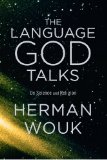
 By Herman Wouk
Little, Brown and Company | 192pgs
Release Date: April 5, 2010
Pulitzer Prize-winning author Herman Wouk endeavors to integrate the disciplines of faith and science in his latest book The Language God Talks: On Science and Religion. Reflecting on his own experiences, fictional writings and friendships with scientific luminaries during his 94 years of life, Wouk theorizes how religion and science can work together to answer life’s major questions about the purpose of humanity and the value of belief in a higher power. During his research into the history of the atomic bomb for the books The Winds of War and War and Remembrance, the author became acquainted with many leading scientists, including Steven Weinberg, Murray Gell-Mann, and Freeman Dyson. But, it was his friendship with Nobel laureate Richard Feynman that inspired Wouk and helped to re-affirm his faith.
Read more…
 In a recent op-ed piece in the Los Angeles Times, public school librarian Sara Scribner emphasizes the importance of libraries, librarians and teaching today’s children to be information literate. Though the Google generation, children in grades K-12, is more tech savvy than previous generations, the huge amount of data available on and off-line makes it difficult for anyone to parse and analyze. Google has become an integral part of our lives, and most kids now head straight for this search engine when doing any kind of research. Yet because of all the false or misinformation on the web, this is often not an effective strategy. Young students need to learn to craft successful search terms, utilize a variety of different search engines and databases, and use critical thinking to decide whether the source provides reliable information.
Read more…
 By Ian McEwan
Nan A. Talese | 304pgs
Release Date: March 30, 2010
Nobel prize–winning physicist, Michael Beard is skating by on his celebrity and little else, as Ian McEwan’s Solar opens. His exorbitant public speaking fees and regular paychecks from his post at Britian’s National Centre for Renewable Energy, give him plenty of time and resources to over-indulge in food, drink and women. In Part One of the book, Beard’s voracious appetites and infidelities have ruined his personal relationships, and caused his professional life to stagnate. In Part Two, the physicist attempts to jump start his career by passing off a dead colleague’s research as his own, and gains sponsorship to study climate change in New Mexico. Because Beard comes by his fresh start in the U.S. dishonestly, he decides to work on mending his deceitful ways. Part Three has him striving to save the environment from Global Warming and himself from a life of debauchery.
Read more…
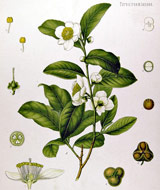
Camellia sinensis
The British Empire enjoyed incredible power and influence during the 19th century, and though its control extended around the globe, it was the lack of control of a small plant that caused a serious issue. The plant in question, Camellia sinensis, used to make tea, was in serious demand by 1800 as the “cuppa” became a British institution. The problem was that China controlled the world’s tea production, and was no longer interested in trading opium for tea as they had in the past. Beginning in 1850, British entrepreneurs sought to develop tea growing in India, the Asian country under the empire’s control, and employed Scotsman Robert Fortune to steal China’s tea making secrets. Sarah Rose writes about this industrial intrigue in the new book For All the Tea In China: How England Stole the World’s Favorite Drink and Changed History (Viking Adult, 272pgs). The author calls this endeavor to wrest control of the tea trade the “greatest single act of corporate espionage in history.”
Read more…
 By Brooke Newman
Harmony | 320pgs
Release Date: March 30, 2010
Brooke Newman recounts the true story of the unusual, yet enduring friendship between her father, James and his African-American housekeeper Jenniemae, in Jenniemae & James: A Memoir in Black and White. James Newman was a brilliant and distinguished mathematician, well known for defining the “googol” (google) concept in math and authoring the important work The World of Mathematics. In contrast, Jenniemae Harrington was a poor, uneducated, heavy-set woman, who though deeply religious, loved to play the lottery with numbers that came to her in dreams. During the ’40′s and ’50′s, the unlikely pair bonded through their sharp minds and shared love of numbers. As racial tensions rose throughout the country, planting the seeds for the Civil Rights Movement, household tensions grew due to James’ infidelities and his wife’s emotional problems. Through it all, Jenniemae became a steady, loving force in the home. This bi-racial friendship may have been outside the cultural norm of the time, yet it blossomed into a wellspring of calm, caring and loyalty for Jenniemae, James, and his family.
Read more…
 Yesterday, AppAdvice.com reported that the iBooks App for Apple’s new iPad will feature the entire Gutenberg Project catalog free of charge. An incredible digital resource, the Gutenberg Project is maintained with the help of thousands of volunteers, and offers more than 30,000 digitized books for free. The books are available in a variety of digital formats (ePub, HTML, etc.) and can be viewed on PCs, smart phones, eReaders, and soon the iPad. All of their titles are in the public domain, and AppleInsider.com speculates that Apple pursued this partnership in order to head off the propagation of inferior apps created to make a profit on books already free to the public. We’re big supporters of reading for free at In the Stax, and applaud Apple for providing these valuable resources to their consumers at no charge.
Read more…
 By Lynn Cullen
Putnam Adult | 400pgs
Release Date: March 23, 2010
Lynn Cullen depicts the lavish and politically charged court of Spain’s Golden Age, in her new historical novel The Creation of Eve. Based on the obscure true-life story of Sofonisba Anguissola, one of the few distinguished female painters of the Renaissance, the book opens in 1559 as she leaves her Italian homeland amid rumors of a scandal involving a fellow art student. At the invitation of King Felipe II of Spain, Sofi becomes a lady-in-waiting at his court, and begins giving painting lessons to his new bride. The young Queen Elisabeth finds an ally in Sofi, as the artist helps the Queen maneuver through the gossipy trenches of the Spanish court and win the affections of the King. The painter yearns only to focus on her art, but is soon entangled in a dangerous love triangle between King Felipe, Queen Elisabeth and Don Juan, the King’s half brother. Drawing on historical fact, Cullen spins an engrossing tale of art, love and Renaissance culture.
Read more…
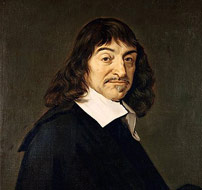
Portrait of René Descartes by Frans Hals
When Erik-Jan Bos, a scholar at Utrecht University in the Netherlands, conducted a recent Google search for documents referencing philosopher René Descartes, he made an extraordinary discovery. A letter written by Descartes in 1641, and later stolen from the Institut de France, had been buried in the archives of Haverford College for over a century. Its theft was documented in the 1880′s, when Count Guglielmo Libri, a mathematics professor and administrator for France’s public libraries, pilfered thousands of valuable letters and documents. He then fled to England to avoid prosecution and sold the pieces off to various buyers. The letter came into the possession of the Pennsylvania college as part of a large collection of correspondence and ephemera, signed by notable political and literary figures, donated by the widow of Haverford alumni Charles Roberts, class of 1864. It is likely that Roberts purchased the letter from a dealer, and did not know it was stolen. Read more…
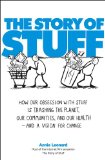 By Annie Leonard
Free Press | 352pgs
Release Date: March 9, 2010
Environmentalist Annie Leonard continues the conversation on over-consumption started in her internet documentary The Story of Stuff in her new book The Story of Stuff: How Our Obsession with Stuff Is Trashing the Planet, Our Communities, and Our Health-and a Vision for Change. Expanding on the material in the film, Leonard discusses the five stages of consumer goods: extraction, production, distribution, consumption, and disposal, and how these stages are damaging the environment and lowering the quality of life. Through in-depth research and first hand experience visiting landfills and factories throughout the world, the author illustrates how natural resources are being depleted and how the toxic by-products of manufacturing material goods are ruining people’s health. The never-ending quest for more “stuff” forces many people to work more, enjoy life less, and fill garbage pits with discarded junk. In the face of this consumption crisis, Leonard suggests a shift in societal values towards emotional well-being, rather than material gain, re-adjusting the work-life balance, and introducing strict legislation world-wide to stop the environmental erosion.
Read more…
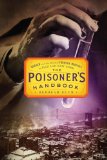 The terms toxicology, trace evidence and DNA have become part of the vernacular thanks to television shows like CSI, Law & Order and the Court TV network. Yet, less than a century ago, forensics was a nascent discipline. Science writer, Deborah Blum, profiles two of the early pioneers in forensic science in her new book The Poisoner’s Handbook: Murder and the Birth of Forensic Medicine in Jazz Age New York (Penguin Press, 336). In 1918, Charles Norris was appointed as the first chief medical examiner in New York City. Norris, along with his lead toxicologist Alexander Gettler, made great strides in the study of toxicology, developing new tests to detect different poisons, even in small amounts. The chief’s efforts helped reform a previously corrupt coroner’s office and emphasize the importance of toxicological evidence, which had largely been ignored.
Read more…