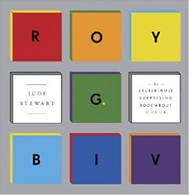
 Recently, Design writer Jude Stewart stopped by the NPR studios to talk about her new book ROY G. BIV: An Exceedingly Surprising Book About Color. The author offers a new perspective on the colors which surround us daily and how different cultures can view and describe the same colors differently. Regarding the relationship between color and language, the book reveals a fascinating link among many languages around the world. Even diverse languages, that share no common root, develop names for colors in the same order: “black, white, red, green and yellow, blue, and then brown.” Read more…
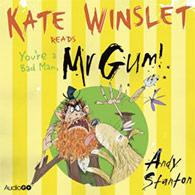 The quirky, silly, and insanely entertaining Mr Gum children’s books, written by British author Andy Stanton, have been re-styled in audio format by Oscar-winning actress Kate Winslet. The series of chapter books, geared toward grades 3-6, detail the devilish dealings of Mr Gum, the hometown baddy in the charming English town of Lamonic Bibber. Combine that villain with a bathtub fairy that doles out wacks with a frying pan, a gingerbread man named Alan with electric muscles, and throw in a few trolls and witches to get an idea of the creative meanderings on which this series takes young readers. Stanton himself had previously recorded audiobook versions of his series, but Winslet has done new audio readings of four installments. The new recording include: You’re a Bad Man, Mr Gum!, Mr Gum and the Biscuit Billionaire, Mr Gum and the Goblins, and Mr Gum and the Power Crystals. Read more…
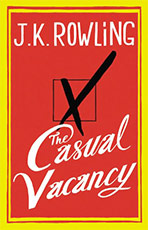 By J.K. Rowling
Publisher: Little, Brown and Company | 512 pages
Release Date: September 27, 2012
Summary:
Today, rabid fans can finally get their hands on The Casual Vacancy, J.K. Rowling’s eagerly awaited adult novel. The story begins with the unexpected death of good-natured parish council member Barry Fairbrother, which throws the small village of Pagford into upheaval. The surface of Pagford may be story-book perfect, but underneath roils a a toxic combination of anger, lust, racism and pretentiousness. Some of the less ethical members of the council, lead by businessman Howard Mollison, angle to fill Fairbrother’s empty seat with one of their own, in a ploy to foist responsibility of their undesirable council estate (British version of the Projects) onto a neighboring village. With their hands washed of what is perceived as a blight on their community, the residents of Pagford will no longer be obliged to educate the children of the poor and downtrodden in their local schools. Rowling paints a sociological portrait of Pagford, revealing various states of the human condition, warts and all. Though this story is decidedly directed at more mature audiences, there are themes in The Casual Vacancy that run parallel to the Potter series. “I think there is a through-line,” Rowling explains in an interview with The New Yorker. “Mortality, morality, the two things that I obsess about.” Read more…
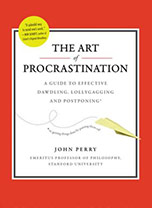 Though procrastination is often seen as a negative trait, Stanford Philosophy professor, John Perry, argues for a more positive view in his new book The Art of Procrastination: A Guide to Effective Dawdling, Lollygagging and Postponing (Workman Publishing Company, 112pgs). During an interview on NPR‘s All Things Considered, the author draws a distinction between being lazy and being a procrastinator. “So, it’s a kind of a paradox. If I get all this stuff done, how can that be when I’m a crummy procrastinator? And it occurred to me, well, there’s a difference between procrastinating and being lazy — I’m not lazy. I do a lot of stuff, as long as it’s a way of not doing something else that I’m supposed to do,” he explains. Read more…
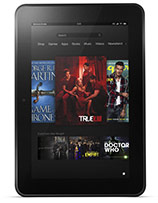 Yesterday, Amazon announced its new Kindle line up, offering several updated tablet options to fit the needs of a wide range of consumers. For the heavy media consumer, the new Kindle Fire HD 8.9″ 4G has all the bells and whistles a technophile could want, with a larger 1920×1200 HD display, exclusive Dolby audio, high speed Wi-Fi and 4G LTE capabilities, at a price point of $499. A Wi-Fi only version will sell for $299. Another added perk for the top of the line Kindle Fire HD is the special $49.99 4G data package that covers the entire first year of use. However, the plan does restrict data usage to 250MB a month, and after the first year, pricing reverts to the standard monthly fee. For those who don’t demand as much screen real estate or 4G connectivity, the 16GB 7″ Kindle Fire has been dropped to $199. Read more…
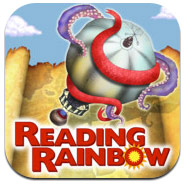 In a recent interview with the GalleyCat Blog, Reading Rainbow creator LeVar Burton, discussed the reason for the cancellation of the beloved children’s program. The answer is simple, yet sad: politics are to blame. “That’s the story that a lot of folks don’t get. No Child Left Behind is doing exactly that, and so the mandate is to teach kids how to read, the rudiments of reading, and there was no money in the budget to foster a love of reading,” he explained. “Look, we have spent so much money on the machinery of war in the last 10, 12 years, we are having to make really ridiculous choices. And we’re sacrificing our kids, literally sacrificing our kids.”
In order to continue his vision for Reading Rainbow, Burton, along with business partner Mark Wolfe, secured the rights to the brand and re-launched it as an iPad app, produced by their company RRKidz. The free Reading Rainbow app features clips from the popular TV show, over 150 books, 16 video field trips, as well as other interactive activities. Read more…
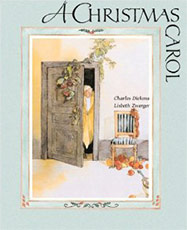 Which book would you most like to pass on to your children? This was the question posed by Britian’s University of Worcester, querying 2,000 adults about the singular book they would choose to share with their kids. Being a British poll, native authors were heavily favored in the top ten list, with Charles Dickens’ A Christmas Carol taking the number one spot. The only Americans to make the list were George Orwell, who came in at number seven with Animal Farm and Harper Lee, who earned the tenth spot with her only novel To Kill a Mockingbird.
The premise of the poll, choosing only one book, is a bit unfair, as most book lovers would be hard pressed to chose just a single book to pass on to their children. No doubt a list as subjective as this will have many bibliophiles shaking their heads at the titles that were not included. For my part, I would have included at least one Roald Dahl title, James and the Giant Peach and Charlie and the Chocolate Factory come quickly to mind. I also feel that J.D. Salinger’s Catcher in the Rye deserves a spot, as Holden Caulfield, that paragon of adolescent discontent, has left an indelible imprint on contemporary literature. Read more…
Categories: Classic, Fiction, News, Young Adult Tags: book news, Charles Dickens, Classic, Fiction, George Orwell, Harper Lee, J.D. Salinger, Roald Dahl, young adult
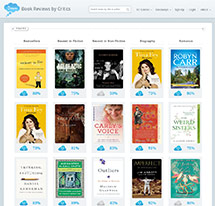 With the official launch of idreambooks.com last week, book lovers will now have a new favorite website to find a good read and browse critic reviews. Following a model simliar to Rotten Tomatoes, idreambooks.com aggregates numerous book reviews from around the web and gives books a percentage rating. According to their website, a critic review is rated “either ‘Must Read!’ or ‘Don’t Read’ before calculating its score.” Only books with a 70% rating or better are recommended, and awarded with a smiley-faced icon. Books that receive lower ratings are badged with a sad-faced icon. The website draws reviews from the online versions of reputable newspapers and magazines, as well as individual blogs and critics that have an established history of credible book reviews. Read more…
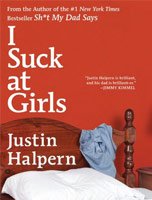 Writer Justin Halpern, whose explosively popular Twitter feed @shitmydadsays grew into a bestselling book and a television series, mines the stories of his youth again for the new memoir I Suck at Girls. This time the focus is Halpern’s own coming of age and early experience (or lack there of) in the dating world. “I just felt like there were a lot of books for people that score with the ladies all the time, and then there are a lot of books for people that were total social outcasts who really went through a lot just to live a normal life. And I didn’t feel like there was a lot of that in between, where I felt most people fell, including myself, and I was like, you know what? People share way more embarrassing stories than these. Maybe I can just give them something that makes the common person feel like they have a kindred spirit,” says the author in an interview with Entertainment Weekly, explaining the inspiration for the book. Read more…
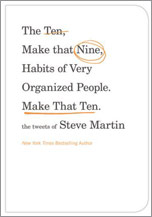 Comedian Steve Martin stopped by NPR’s Morning Edition program last week to talk about his latest book The Ten, Make That Nine, Habits Of Very Organized People. Make That Ten., inspired by his Twitter feed. Martin did not join the Twitter universe until 2010, when friend Tom Hanks encouraged him to try tweeting for promotional purposes. “…I thought, well that’s interesting, because I was growing frustrated that when you do a movie or a record, that you have to promote it. I was going on television [and] playing to an audience of 4 million, for example, and maybe only 400 of them were interested in my so-called product. And I thought if I had a Twitter feed and say I had a following of a 100,000, that means 100,000 of them would be interested in my book,” the funny man explained.
“It was logical, but it didn’t turn out to be true. It turned out if I had a Twitter feed of a 100,000, four of them were interested in my book. So, tweeting is really only good for one thing — it’s just good for tweeting … It is rewarding, because it’s just its own reward. It’s sort of like heaven.” Read more…