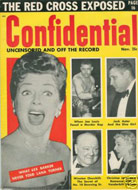
 Upon reading James Ellroy’s L.A. Confidential, former journalist Henry E. Scott developed a deep fascination of Confidential magazine (fictionalized in the novel as Hush-Hush magazine). The result, Shocking True Story: The Rise and Fall of Confidential, “America’s Most Scandalous Scandal Magazine” (Pantheon, 240pgs), delineates the history of the original scandal rag that gave birth to today’s purveyors of titillating tales, such as Us Magazine, Entertainment Tonight and TMZ. Publisher Robert Harrison introduced the bi-monthly magazine in 1952, its blazing yellow and red masthead and catchy headlines gleefully exposing the infidelities, sexual orientation and political leanings of the day’s biggest stars. Through his research, Scott was surprised to find that each published article was carefully fact checked, and most of the stories reported the facts accurately. Though more respectable publications, like Time, derided the scandal sheet as “a cheesecake of innuendo, detraction, and plain smut”, the public devoured every issue and circulation soon rose to more than 3 million.
Read more…
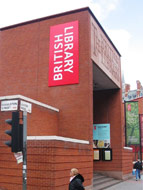 The Klencke Atlas, a magnificent 350 year-old tome that boasts the title of the world’s largest book, will go on public display with its pages open for the first time, at the British Library. The book was given to King Charles II in 1660 by Dutch merchants, to commemorate his restoration to the British throne. It is approximately 6 ft. tall by 3 ft. wide, when closed, and contains 37 maps detailing the most comprehensive geographic and historical information of that era. The maps, printed from exquisitely engraved copper plates, were initially intended to be removed from the book and displayed on walls, hence the enormous size. Charles II kept the book intact, storing it in his cabinet of curiosities. King George III gave it to the British Museum 1828, as part of a large gift of geographic and topographic materials. It has since remained at the institution, out of public view.
Read more…
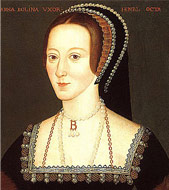 Historian Alison Weir builds a case for Anne Boleyn’s innocence in the charges of adultery and treason that lead to her death sentence, in her new book The Lady in the Tower: The Fall of Anne Boleyn (Ballantine, 464pgs). Boleyn has remained a striking historical figure through the centuries, and volumes have been written about her life and marriage to King Henry VIII. “She’s the Other Woman in an eternal triangle,” states Weir in an interview with NPR, “and Katherine of Aragon is the Good Wife whom Henry dumps for her.” In this latest book, Weir conducts “a forensic investigation” of the queen’s downfall and focuses on the last four months of her tragic life.
Read more…
Categories: Biography, New Release, News, Non-Fiction Tags: Alison Weir, Anne Boleyn, Henry VIII, Hilary Mantel, The Lady in the Tower: The Fall of Anne Boleyn, Thomas Cromwell, Tudors, Wolf Hall
 The fight for supremacy on the eBook frontier has gotten ugly. Last week, book-selling giant Amazon battled with Macmillan, one of the largest publishers in the U.S., over eBook prices. The New York Times reports that Macmillan CEO John Sargent flew to Seattle on Thursday to meet with Amazon execs and push to move to a pricing model where the publisher would set consumer prices for eBooks, with new releases ranging from $12.99 to $14.99, and Amazon taking a 30% sales commission. These terms are similar to the agreement Macmillan now has with Apple, to sell its titles on the new iBooks app for the iPad. However, Amazon remained adamant about maintaining its current $9.99 price point for new releases, and after a tense stand-off, stopped selling books from Macmillan and its family of imprints on Friday (though the publisher’s titles could still be purchased from third party vendors on the site.)
Read more…
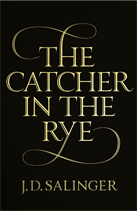
New cover design by UK publisher Hamish Hamilton.
Beloved, yet reclusive, author J.D. Salinger passed away on Wednesday at the age of 91. Though he had not published new material or made public appearances in decades, he was still considered an icon of American literature. Salinger published just four books between the years of 1951 and 1963: The Catcher in the Rye, Nine Stories, Franny and Zooey and Raise High the Roof Beam, Carpenters and Seymour: An Introduction, and published his last short story in 1965. His first (and only) full length novel, The Catcher in the Rye, shot him to fame and forced him into the limelight he would soon come to abhor. With 16-year-old Holden Caulfield’s angry and honest narration, The Catcher in the Rye, stuck a chord with young people around the world, and inspired generations. The Guardian credits him with “inventing the 20th-century teenager”.
Read more…
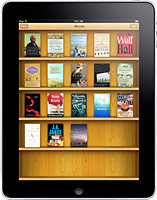 Earlier this morning, Steve Jobs introduced the world to Apple’s latest technological marvel: the iPad. The slick new interactive tablet, which looks a lot like an iPhone on steroids, allows users to browse the web, get e-mail, view photos and video, play music and games… and read books.
Just .5″ thick and weighing 1.5 pounds, the iPad’s 9.7″ glossy multi-touch IPS display offers considerably more screen real estate than its competitors in the eReader space. Both the Nook by Barnes & Noble and the Amazon Kindle 2 have 6″ screens, though the Nook does also have a 3.5″ color nav screen. Like the Nook, the iPad will use the ePub format.
Apple’s new iBooks app (which works similar to iTunes) and its partnership with 5 big publishing houses: Hachette Book Group, HarperCollins, Macmillan, Penguin Group, and Simon & Schuster, allow users to access a wide selection of titles that are easily purchased and downloaded. In addition to books, The New York Times has already announced its new app for the iPad, and a number of other publications are rumored to be in talks with Apple to provide content for the device.
Read more…
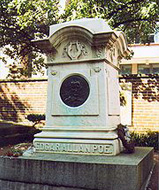 For more than half a century, a mysterious visitor would make an annual pilgrimage to Edgar Allan Poe’s grave site to leave three roses and a bottle of cognac to mark the anniversary of the author’s birth. The Seattle Times reports that for the first time in six decades, the illusive mourner failed to show on January 19 of this year. This unexpected absence has left many wondering if the stranger in the black hat and white scarf has met an untimely end, and if he’ll ever return. “I’m confused, befuddled,” said Jeff Jerome, curator of the Poe House and Museum. “I don’t know what’s going on.” The first written reference to the visitor was published in a 1949 issue of The Evening Sun of Baltimore. Since then the mysterious mourner has developed a following of his own, with Jerome and many other Poe enthusiasts staking out Westminster Hall and Burying Ground, to watch the dark figure leave his gifts at Poe’s grave stone each year.
Read more…
 Public libraries throughout the country are coming up with creative compromises to clear fines and help those in need. According to the New York Times, several branches in Illinois, Ohio and New Hampshire have started accepting donations of groceries or canned goods, instead of money. The food is then donated to local food banks and shelters. Librarians nationwide have feared that in this down economy, overdue fines are keeping people from visiting libraries and returning materials. These donation programs have proved very popular in their communities, allowing people to clear their record and re-gain access to library resources, while helping the less fortunate. Robert Rice, the public library director in Pelham, N.H is proud of what their food-for-fines program has achieved so far. “We got our materials back and did something positive for the community. Use is up greatly, and budgets are being cut.”
Read more…
 In 1936, 12 year old Thomas McArdle checked out a brand new history book from the Chestnut Street Elementary School library in Scottdale, PA. The book, The Birth of Rome by Laura Orvieto, told the story of Rome’s development, and the young McArdle needed it for his 6th grade history paper. “I just fell in love with the book and then I did a nasty thing, I kept the book. I read it about three or four times after that,” he explains in the Daily Courier. “I majored in history in college. That book, that class, and that teacher made a big difference in my life. I still read about Roman and European history.” For 73 years McArdle kept the book, taking it with him as he moved around the U.S. Recently, he contacted his cousin, who still resides in Scottdale, to help him return the book to its rightful owners.
Read more…
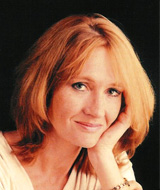 The Guardian has proclaimed JK Rowling the winner of the last decade, as far as book sales go. The Harry Potter author dominated the bestsellers lists during the “noughties”, selling more than 29 million books, prompting the New York Times to create a new bestsellers list for children’s books, and racking up sales of over $360 million (£225.9 million). Though she characteristically shied away from the press, Rowling’s personal story became mythologized as well: A struggling single mother, toils away in obscurity on a story about a boy wizard, only to hit it big with her first published novel. Really, really big. Though Rowling’s first royalty check for the UK publication of Harry Potter And The Philosopher’s Stone (published in the U.S. as Harry Potter And The Sorcerer’s Stone) was a meager $960.00 (£600), she was a millionaire just one year later. Thanks to the continued popularity of the Harry Potter books, movie franchise and merchandise licensing, Rowling is now reported to be worth about $1 billion (£545 million).
Read more…