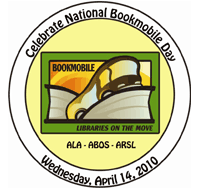
 The American Library Association (ALA) celebrates the first annual National Bookmobile Day today, as part of its National Library Week 2010 (April 11-17) festivities. For over a century, bookmobiles have provided outreach services to communities in rural, tribal and urban areas. As an integral part of library services throughout the county, bookmobiles have helped bring reading and educational materials to people of all classes and ages. Even today, these mobile units offer many of the same services as a traditional library branch, allowing people to check out books and DVDs, take classes, and access the internet. The ALA hopes this celebration will underscore the importance of bookmobiles and help expand their scope.
Read more…
 In a recent op-ed piece in the Los Angeles Times, public school librarian Sara Scribner emphasizes the importance of libraries, librarians and teaching today’s children to be information literate. Though the Google generation, children in grades K-12, is more tech savvy than previous generations, the huge amount of data available on and off-line makes it difficult for anyone to parse and analyze. Google has become an integral part of our lives, and most kids now head straight for this search engine when doing any kind of research. Yet because of all the false or misinformation on the web, this is often not an effective strategy. Young students need to learn to craft successful search terms, utilize a variety of different search engines and databases, and use critical thinking to decide whether the source provides reliable information.
Read more…
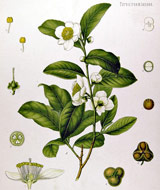
Camellia sinensis
The British Empire enjoyed incredible power and influence during the 19th century, and though its control extended around the globe, it was the lack of control of a small plant that caused a serious issue. The plant in question, Camellia sinensis, used to make tea, was in serious demand by 1800 as the “cuppa” became a British institution. The problem was that China controlled the world’s tea production, and was no longer interested in trading opium for tea as they had in the past. Beginning in 1850, British entrepreneurs sought to develop tea growing in India, the Asian country under the empire’s control, and employed Scotsman Robert Fortune to steal China’s tea making secrets. Sarah Rose writes about this industrial intrigue in the new book For All the Tea In China: How England Stole the World’s Favorite Drink and Changed History (Viking Adult, 272pgs). The author calls this endeavor to wrest control of the tea trade the “greatest single act of corporate espionage in history.”
Read more…
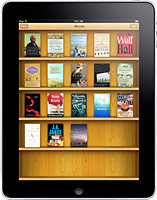 Yesterday, AppAdvice.com reported that the iBooks App for Apple’s new iPad will feature the entire Gutenberg Project catalog free of charge. An incredible digital resource, the Gutenberg Project is maintained with the help of thousands of volunteers, and offers more than 30,000 digitized books for free. The books are available in a variety of digital formats (ePub, HTML, etc.) and can be viewed on PCs, smart phones, eReaders, and soon the iPad. All of their titles are in the public domain, and AppleInsider.com speculates that Apple pursued this partnership in order to head off the propagation of inferior apps created to make a profit on books already free to the public. We’re big supporters of reading for free at In the Stax, and applaud Apple for providing these valuable resources to their consumers at no charge.
Read more…
Categories: News Tags: AppAdvice.com, Apple, AppleInsider.com, eBooks, eReader, free eBooks, Gutenberg Project, iBooks, iPad, iPhone, iPod Touch, Kindle 2, Nook
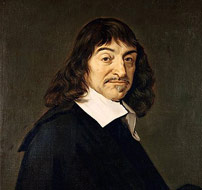
Portrait of René Descartes by Frans Hals
When Erik-Jan Bos, a scholar at Utrecht University in the Netherlands, conducted a recent Google search for documents referencing philosopher René Descartes, he made an extraordinary discovery. A letter written by Descartes in 1641, and later stolen from the Institut de France, had been buried in the archives of Haverford College for over a century. Its theft was documented in the 1880′s, when Count Guglielmo Libri, a mathematics professor and administrator for France’s public libraries, pilfered thousands of valuable letters and documents. He then fled to England to avoid prosecution and sold the pieces off to various buyers. The letter came into the possession of the Pennsylvania college as part of a large collection of correspondence and ephemera, signed by notable political and literary figures, donated by the widow of Haverford alumni Charles Roberts, class of 1864. It is likely that Roberts purchased the letter from a dealer, and did not know it was stolen. Read more…
 The terms toxicology, trace evidence and DNA have become part of the vernacular thanks to television shows like CSI, Law & Order and the Court TV network. Yet, less than a century ago, forensics was a nascent discipline. Science writer, Deborah Blum, profiles two of the early pioneers in forensic science in her new book The Poisoner’s Handbook: Murder and the Birth of Forensic Medicine in Jazz Age New York (Penguin Press, 336). In 1918, Charles Norris was appointed as the first chief medical examiner in New York City. Norris, along with his lead toxicologist Alexander Gettler, made great strides in the study of toxicology, developing new tests to detect different poisons, even in small amounts. The chief’s efforts helped reform a previously corrupt coroner’s office and emphasize the importance of toxicological evidence, which had largely been ignored.
Read more…
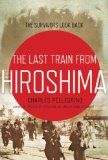 In February, concerns were raised about the veracity of one of Charles Pellegrino’s sources in his new book The Last Train From Hiroshima: The Survivors Look Back, which documents the experiences of Japanese blast survivors as well as the American flight crews that dropped the atomic bomb. Joseph Fuoco (now-deceased) claimed to be a last-minute substitution on the flight crew of one of two escort planes accompanying the Enola Gay during its fateful mission on Aug. 6, 1945. But, Fuoco’s account of the bombing and his claim that an accident while readying the weapon killed an American scientist and weakened the bomb’s power, have been vehemently denied by historians and the surviving flight crew members. The Seattle Times reports that evidence has come to light that proves flight engineer, James Corliss, actually flew in the escort plane, not Fuoco. Though, it is possible that he did participate in reconnaissance flights over Hiroshima before and after the blast.
Read more…
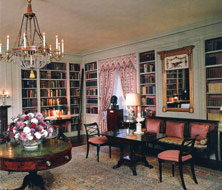 Last week, blogger and radio host Rob Port set the conservative blogosphere ablaze when he presented photographic “evidence” that “Michelle Obama Keeps Socialist Books in the White House Library”. During a recent tour of the White House, Port found two books on socialism in its library, snapped a photo, and blogged about it on the web. His post created a controversy, inflaming both sides of the political aisle, and inciting numerous comments. Yet, it turns out that his “evidence” and the surrounding controversy is a lot of sound and fury signifying nothing. The Washington Post reports that a First Lady did indeed choose those books for the White House library, but it was Jacqueline Kennedy, not Michelle Obama, who chose the books in 1963. The books have been in the White House for almost 50 years, through both Democratic and Republican administrations (yes, even the Reagan years). Port said in his post that his tour guide credited Michelle Obama with selecting the books, but it is unclear if the facts were misstated by the guide or misheard by the blogger. Perhaps if Port, a self professed bibliophile, had done a little more reading and a little less inflammatory finger pointing, he would have been able to report the facts more accurately.
Read more…
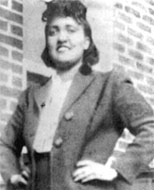 In 1951, before Henrietta Lacks died of cervical cancer in the Johns Hopkins Hospital “colored” ward, doctors took a small sample of her tumor. The tissue sample, taken without Lacks’ knowledge, stunned scientists when the cells successfully grew in the research lab. This marked the first time a line of human cells had survived without a human body. Lacks’ cells, later known as HeLa, proved extremely robust and flourished in the lab environment. Since their initial harvest, at least 50 million metric tons of the cells have been grown, and have contributed to advances and breakthroughs in the treatment of diseases like polio and AIDS. Yet, Lacks’ family were never told of (or compensated for) this research, and only learned of her miraculous afterlife in the 1970′s when the scientists at Johns Hopkins contacted the family in hopes of further testing. Science writer Rebecca Skloot combines Lacks’ personal history and her family’s reaction to the situation, along with scientific accounts, to tell a compelling story in her new book The Immortal Life of Henrietta Lacks (Crown, 330pgs).
Read more…
 In 1940, high school students, Linda Porte and Woodland Drake, were introduced by mutual friends during a study session at the Millicent Library in Fairhaven, MA. As the library was closing Linda became upset that she would not be able to finish her report. The book she needed, a guide to Fairhaven, was a reference book and could not be checked out. During the group’s walk home, she again expressed her disappointment at not having the book, and Woodland surprised her by pulling it out of his jacket. This act of “unofficial borrowing” would spark a lifetime of love, with a marriage that lasted 64 years and four children. Their son, Paul Drake, himself a librarian at the University of Guam, recently recounted his parent’s love story to the Standard-Times. Incredibly the couple had held on to the book for the rest of their lives, but after they both passed away (Linda in 2007 and Woodland in 2009), Paul felt it was time to finally return it to its rightful owner.
Read more…