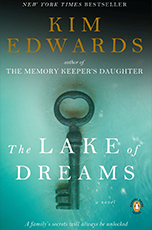
 This week The Huffington Post recounted the true, but little known, story of the inspiration behind Charles Dickens’ iconic holiday tale A Christmas Carol. Though the British author had already published several novels, he was struggling to make ends meet in the fall of 1843. During an evening constitutional through a seedy London neighborhood, Dickens was reminded of his own hardscrabble childhood, and was struck with the inspiration to write a cheerful, uplifting Christmas story for all those who had felt the harsh sting of poverty.
With the holidays quickly approaching, he decided on a short story format, and gave the publisher very detailed instructions on the book design, specifying a gold stamped cover, a green and red title page and several etched illustrations. Despite the high production values, the book was reasonably priced at five shillings, so that it would be affordable to a large segment of the population. Read more…
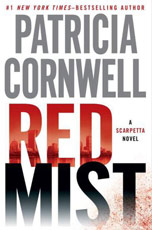 Fan favorite, author Patricia Cornwell, is busy at work promoting her latest novel in the Kay Scarpetta series Red Mist. The 19th installment has the formidable medical examiner traveling to a remote women’s prison in Georgia to meet with an inmate who might have knowledge of the brutal murder of Jack Fielding, Scarpetta’s former deputy chief. While investigating Fielding’s death, the Dr. uncovers links to other murders committed across the country, as well as a potential international terrorist threat.
Besides unravelling a murder mystery, Red Mist, addresses the larger issues of death penalty ethics and the prison system. In a phone interview with The Oregonian, Cornwell spoke about working to keep the 22 year-old series interesting to herself and her readers. “It’s not a job,” she says, “it’s like a relationship that I treat with sensitivity and selflessness and that needs to be nurtured.” Read more…

David Sedaris at WBUR studios in June 2008.
Bestselling memoirist David Sedaris recently spoke to the San Francisco Chronicle about his penchant for telling stories with a dark twist and the enjoyment he gets out of interacting with his fans while on a book tour. When asked about touring, he says, “To me that’s my reward for the solitude of writing – you get to be in front of that audience, and you get to read it out loud.” Sedaris is well known for his patience at book signings, conscientiously trying to talk to everyone in line, to the point of spending hours in one location. Read more…
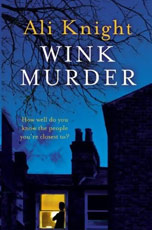 According to novelist Alison Potter, one of the most enjoyable things about writing is creating names for her characters. “You can let your imagination run free, stripped of caution and compromise.” Yet, when she was asked to choose a pen name for herself, the naming process was no longer carefree. Hodder, her publisher, approached her about a name change as they were working on her debut thriller Wink Murder. “Suddenly, it’s personal and heartfelt, challenging your identity and family history,” she writes in an article for The Guardian.
“We may spend our lives escaping our parents and their influence, carving out our own identities, but our name is given to us and most of us never change it. Even if women marry, they have no choice over the surname they take. Alison Potter had served me perfectly well for about 40 years, until now. Read more…
 Author Judy Blume has captured the hearts and imaginations of generations of young readers with beloved characters like Peter Hatcher and his hilariously annoying little brother Fudge. The acclaimed author has also tackled weightier subjects like family tragedy and budding sexuality in YA novels such as Tiger Eyes and Forever. Because of her popularity, and the honesty with which she approaches her work, it should come as no surprise that several of her titles have banned at various schools and libraries. Blume, who is staunchly opposed to censorship, recently appeared on NPR’s Talk of the Nation to discuss her experience with challenged books and why she thinks every child should be free to read whatever he or she chooses. Read more…