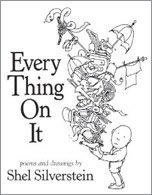
 There are millions of adults out there who were obsessed with Shel Silverstein’s poems in Where the Sidewalk Ends and A Light in the Attic at some point during their childhood. What kid could resist that magical blend of humor and storytelling accompanied by the author’s quirky illustrations? Now a new generation of children can enjoy a brand new book by Silverstein, and become entranced by his lyrical wit. This week, HarperCollins released Every Thing On It, a compilation of poetry and artwork that has never been published before. Though the writer passed away in 1999, this posthumous publication is not a tossed together collection of his lesser work. According to an article in the Los Angeles Times, the book “was culled from material Silverstein really liked but never found a place for in his other collections.” Read more…

The Witches 1st edition cover art.
Last Tuesday, September 13, would have been author Roald Dahl’s 95th birthday. To honor the icon of children’s literature, Flavorwire posted an article listing ten of the writer’s best villains. Some nasty all-stars made the cut, such as the repulsive aunt Spiker and aunt Sponge, who torment the orphan James in James and the Giant Peach. Miss Agatha Trunchbull, the sadistic headmistress in Matilda, also topped the list. Some lesser known, but equally cruel, baddies rounded out the top ten, including the disgustingly hairy couple from The Twits and the Grand High Witch from The Witches, all of whom absolutely detest small children. Who is your favorite villain in the Roald Dahl catalog?
In a strange turn of events last week, members of Dahl’s own family are being accused of villainy, or at least stinginess, after granddaughter Sophie Dahl made a public plea to help raise £500,000 ($790,000) to save the novelist’s writing hut on British radio. The U.K., like most of the world, is suffering from a weak economy and members of the public responded with outrage that a family that still reaps the royalties from the healthy sales of Dahl’s books are asking for financial help. Read more…
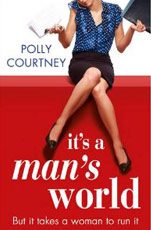 British author Polly Courtney has severed ties with publisher HarperCollins out of frustration at how the jacket art on her last three books have portrayed her stories as frivolous chick lit. “My writing has been shoehorned into a place that’s not right for it,” she states in an interview with The Guardian. “It is commercial fiction, it is not literary, but the real issue I have is that it has been completely defined as women’s fiction … Yes it is page turning, no it’s not War and Peace. But it shouldn’t be portrayed as chick lit.”
The proverbial straw that broke the camel’s back was the cover design for Courtney’s latest book It’s a Man’s World, which features a lithe young woman in a short skirt and high heals, standard imagery that characterizes much of women’s fiction. The novelist feels the cover misrepresents the story, which is about a woman’s struggle to helm an all male staff at a men’s magazine. Read more…
 Princeton University associate professor of neuroscience, Dr. Sam Wang, and Dr. Sandra Aamodt, former editor of the prestigious scientific journal Nature Neuroscience, have teamed up to write a second book Welcome to Your Child’s Brain: How the Mind Grows from Conception to College (Bloomsbury USA, 336pgs). Their new work studies the development of the young brain and offers suggestions to parents on fostering intellectual growth and self-control. Even from birth, children’s brains are functioning at a high level. “They really come equipped to learn about the world in a way that wasn’t appreciated until recently,” explains Dr. Aamodt in an interview with NPR. “It took scientists a long time to realize that their brains are doing some very complicated things.” Read more…

One World Trade Center, under construction. June 2011.
In the years since the horrible events of September 11, several non-fiction books recounting the tragedy, like The 9/11 Commission Report, have been bestsellers. However, as the 10th anniversary looms near, a singular work of fiction that defines the era has failed to emerge. Novelist and playwright Norman Mailer advised a fellow writer to wait a decade before addressing the attacks in print because “it will take that long for you to make sense of it.” Was he right?
“The world has changed since 9/11 and our culture has changed but I haven’t yet seen the book or the movie or the poem or the song that captures the people we are now and helps us redefine who we are in this new post 9/11 world,” says journalist Lawrence Wright in an interview with Reuters. Read more…